Why I’m not gatekeeping a tool none of us have figured out yet.
I use Claude the way I hope my students eventually will. I give it an instruction, then I break it. I ask it to argue against itself. I ask what it would say if it ignored my first three sentences. I treat the prompt as a starting position, not a finish line.
I’m still waiting for one of my students to do the same thing.
I gave my sophomores a tight, scaffolded prompt this year: use AI to compare two sources on the decolonization of Kenya, one in English, one in Swahili. Numbered steps. Clear goal. Every student who used it well followed the steps. Nobody broke them. Nobody asked Claude to name what each source assumed, or where the silences were, or what the opposite argument would say if it had to defend itself.
Maybe that’s fine. Following the steps is a skill I’m supposed to be teaching. But there’s a version of that assignment where a kid takes the prompt apart, finds the seam in it, and builds something more useful than what I handed them. I know, because I’ve done it myself. I just haven’t watched a student do it yet.
Kids aren’t failing to think divergently. Research on cognitive flexibility and neurodivergent thinking shows the raw material is already there. What’s missing might just be the invitation.
Neurodivergent students, especially those with ADHD, consistently score higher on measures of divergent thinking: fluency, flexibility, originality. They see the problem differently. They try the unconventional approach first. Research on cognitive flexibility shows the same pattern at a larger scale: when people bring diverse backgrounds to a task, problem-solving capacity expands and the solutions get better. This isn’t a fringe finding. It shows up in classrooms, in labs, in creative industries where nearly half the workforce identifies as neurodivergent.
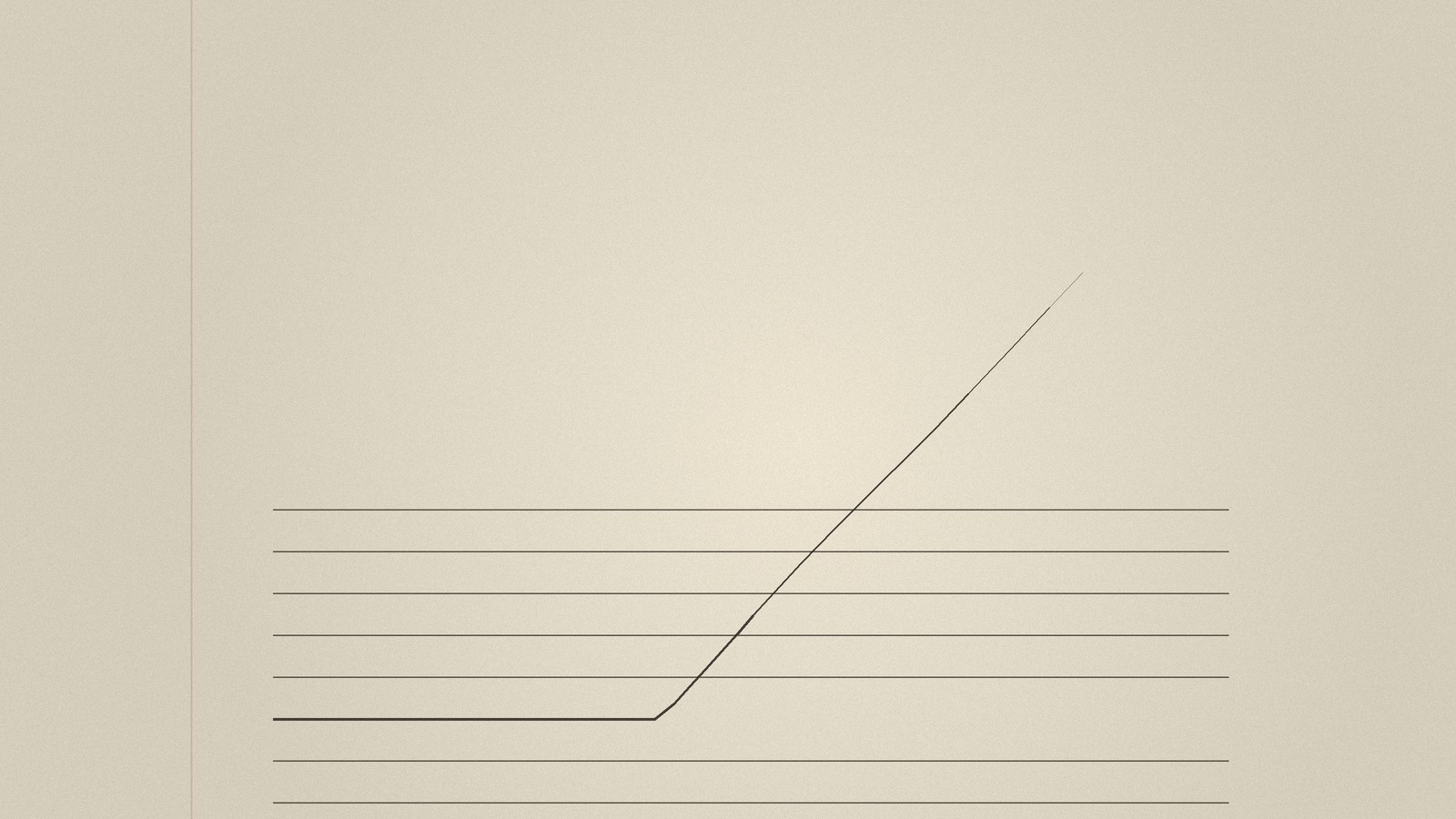
Creativity, according to researchers who study it directly, emerges at the constraint. When you push against a default instead of accepting it, you create the conditions for something new. Originality lives at that edge, not in total freedom but in purposeful deviation from what you were told to do.
With AI, that edge is sitting right in front of every student, every day. The default output from a model is often good. Competent. Safe. It doesn’t teach anyone anything. The moment a student asks “What if I asked it this way instead?” or “What happens if I tell it to argue the opposite?” That’s where the interesting work starts. Most of my students aren’t there yet. I don’t think that’s a failure of the students. I think it’s a failure of how we’ve taught them to treat instructions: as things to satisfy, not things to test.
I tell my students I have a degree in graphic design. I worked at 7-Eleven. I’ve done landscaping. I’ve made fine art. I’ve worked in a hospital. None of it was on a path to teaching history, but all of it sits underneath how I teach now — the willingness to take the weird job, the attention to detail a grocery counter demands, the physical problem-solving of laying sod, the experimentation of a studio, the care hospital work requires. Different experiences talk to each other in ways that make the next thing better.
I think the same will be true for AI, once we let it. The student who’s comfortable being wrong, who’s tried breaking things in other domains, who thinks sideways because that’s how their brain works: that student is going to partner with AI in ways the rest of us haven’t seen yet.
I’m not counting off points for a student who uses AI differently than the rubric expects. That’s not generosity. It’s honesty about what AI is right now: a system still being built, still finding its edges, open and unconstrained enough that none of us, teacher or student, fully knows what it’s for yet. I don’t want to gatekeep a tool I’m still learning myself. I want to break it together with my students and see where we end up meeting. If they fall in love with that process (the poking, the testing, the deliberate misuse), that’s where the thinking happens. Not in the polished output. In the mess of finding out what the thing can do.
David Jacobson teaches AP World History Modern and AP US History at Shanghai American School. He writes about AI in education at shouldiuse.ai and is the author of The AI Doesn’t Know Your Students.
Sources
- Different Minds, Stronger Science: Celebrating Neurodiversity in Research and Innovation
- New research finds the creative industry is failing neurodivergent talent
- Study of divergent thinking and task performance in children with ADHD through a modular robotic task
- Possibility Literacy: Navigating AI’s Productive Paradoxes in Education
- AI Should Push, Not Replace, Students’ Thinking (Harvard Business Publishing Education)
- Creative patterns in the age of AI: Securing America’s education edge (Brookings)
- Thinking Inside the Box: The Creative Magic of Constraint (Apple Education)
- AI can help − and hurt − student creativity (University of South Carolina)
- Cognitive flexibility and cultural intelligence (ScienceDirect)
- Investigating cognitive flexibility and innovation in interdisciplinary project-based learning (PMC)
- Fostering cognitive flexibility through design thinking in biology education