I’m skeptical, and I’d like to stay that way
Good. Skepticism is a professional skill. Start with the sane version of this conversation.
Start hereShould I Use AI? is written from a working classroom, not a product roadmap. Tools worth your time, straight answers on academic integrity, and a way to think about AI that keeps students at the center.
Every recommendation here has been tried on a real prep period, with real students, on a real Tuesday.
No vendor money shapes what gets recommended. When a tool isn’t worth your time, the review says so.
AI is neither magic nor apocalypse. Both stories are sold to schools; neither survives contact with a classroom.
The question is never what AI can do. It’s what your students need to learn to do themselves.
Good. Skepticism is a professional skill. Start with the sane version of this conversation.
Start hereClassroom-ready tools, reviewed by a teacher who has used them with students.
Browse toolsWhat AI use is worth worrying about, what isn’t, and how to talk to students about the difference.
Read the integrity guideFrameworks and free curriculum for teaching students what AI is, and what it isn’t.
See literacy resourcesHow to write guidance that survives contact with real classrooms and real parents.
Start with policyHow to build work where AI doing it for the student defeats the point.
Rethink assignments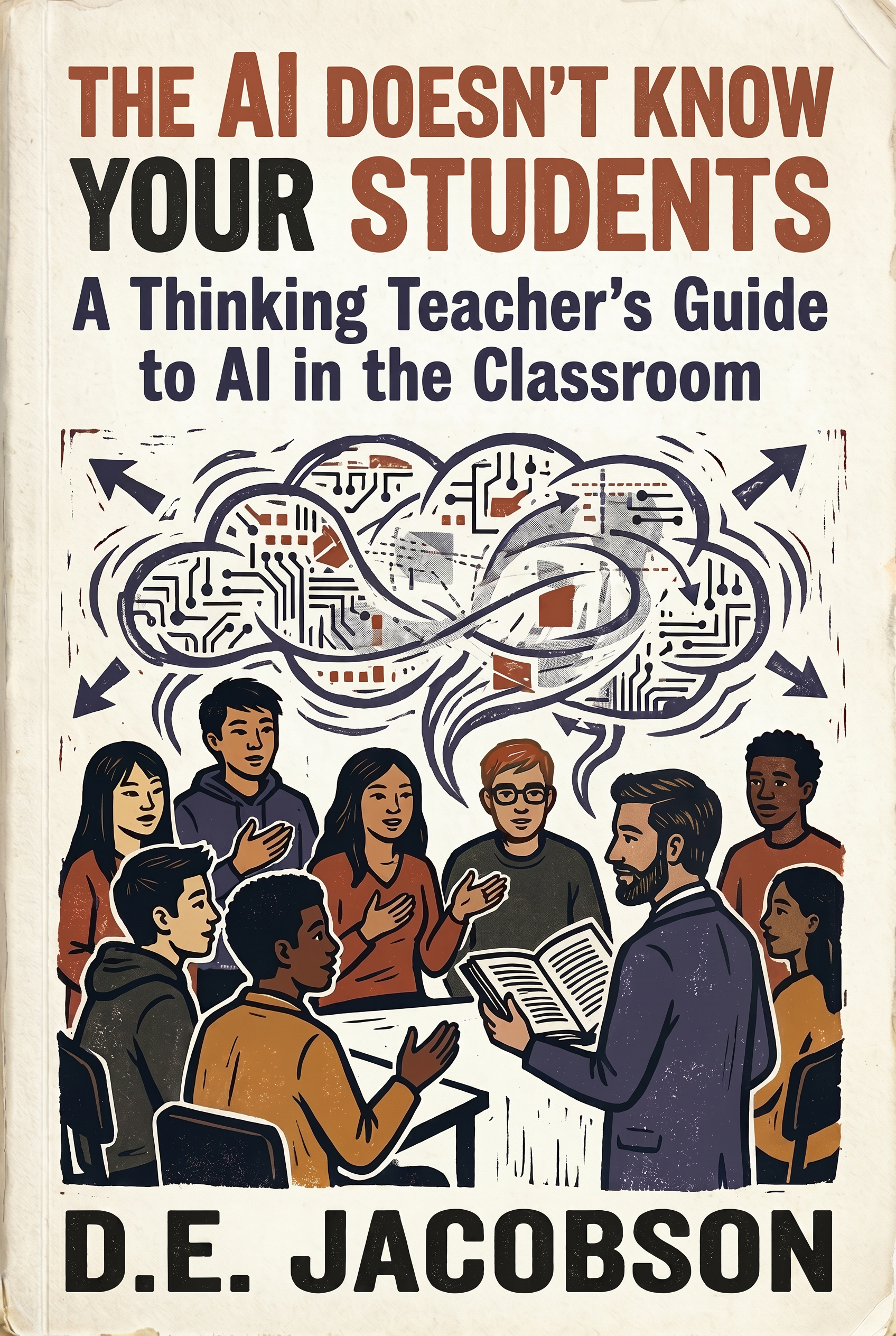
A Thinking Teacher’s Guide to AI in the Classroom
This book is for teachers who are curious about AI. Not the version sold to administrators in PowerPoints; the one showing up in your classroom every day. It’s practical, honest, and built around the things that matter: students, professional judgment, and the work only teachers can do.
“It’s a really accessible read! I discussed Ch. 20 ‘There is no neutral AI’ with my students in our weekend AI Fluency Advanced course earlier and it really helped them look at AI as something much more than a technology.” — Jen Chan, AI-fluent educator
The ban-or-allow debate is settled by the world students already live in. The real question is what school is for.
The feedback math was never sustainable. AI changed what good feedback is possible, not what it looks like.
How to design assignments where AI doing the work defeats the point, and why that shifts everything.
If it’s listed here, it earned the spot.
A living map of the AI-in-education conversation, built with my school’s AI Council.
Best forSeeing the shape of the whole conversation before wading into it.
Visit60+ AI tools built specifically for teachers — lesson planning, differentiation, feedback, and more.
Best forTeachers who want one login for lesson planning, differentiation, and feedback drafts.
A global framework for understanding AI literacy for educators at every level of experience.
Best forCoaches and leaders who need shared language before shared policy.
Free curriculum resources for teaching AI concepts to students in accessible, age-appropriate ways.
Best forTeaching students what AI is without a computer science degree.

One email, most weeks. What I’m seeing in the classroom, what’s working, what isn’t. Nothing else.
I’m David Jacobson. I teach high school history, and I’ve been figuring out AI the same way you have: in a classroom, with students, on deadline. This site is where I write down what I learn so you don’t have to start from zero. There’s no company behind it and no product roadmap. When something works with my students, I tell you. When it doesn’t, I tell you that too.